The air in the room was heavy with the scent of old paper and floor wax. I could feel the weight of their gazes—dozens of eyes, some narrowed in suspicion, others heavy with a weariness that suggested they had seen a thousand tragedies before mine. I took a breath, my lungs feeling tight as if the oxygen were being rationed. I didn’t want to be here, but the letters had arrived, and the reality of the situation had finally forced my hand. I had to tell them what happened in the quiet corners of a town they would never visit.
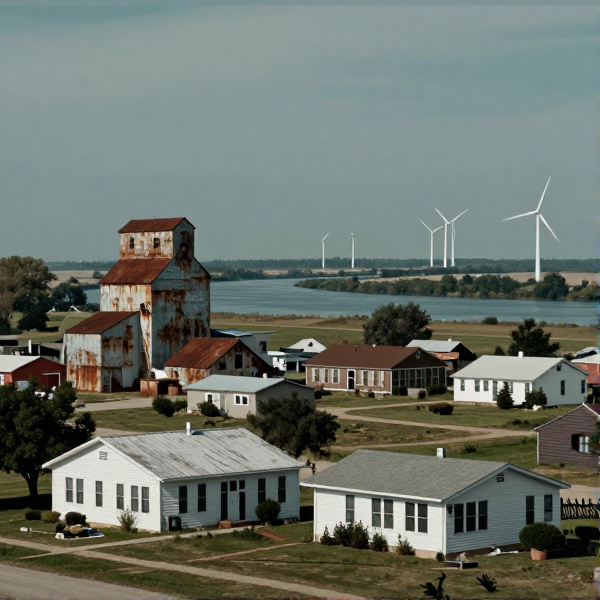
It started in Spring Valley, a small town that few people know unless they need to stretch their legs and recharge from driving the interstate. It was a town of porches and slow-moving afternoons, until the Cogni system was unveiled. It was the pinnacle of neuro-technology: a fully immersive VR suite that bypassed traditional input methods. By utilizing a high-fidelity EEG array integrated into a lightweight headset, the system could interpret synaptic firing patterns in real-time. It didn’t just simulate a world; it mapped your consciousness onto a digital architecture. My best friend, Tim, and I were obsessed with the announcements, the leaks, the blueprints, and everything else we could find until the release. We spent our sophomore year of high school dreaming of the games where you could be anything, the “Social Lounges,” where we’d build our own cities, and the “Deep-Dive” zones where physics were merely a suggestion.
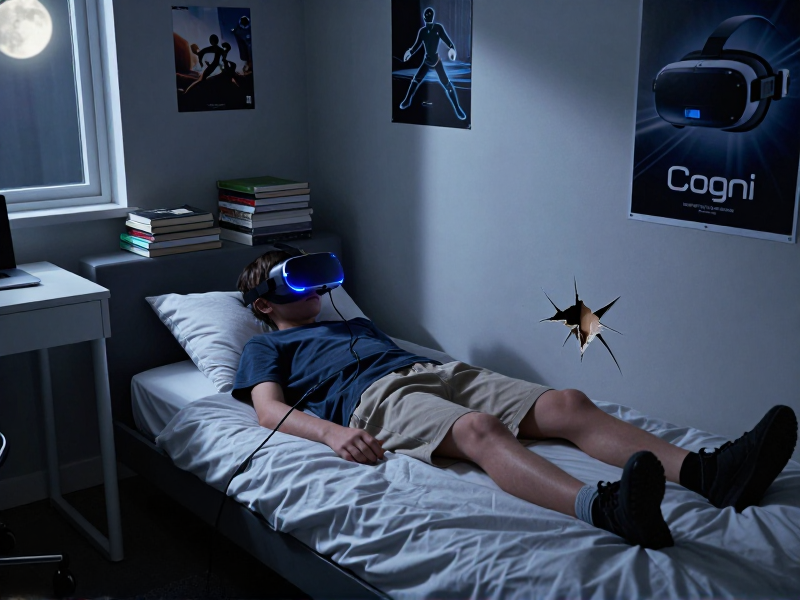
I worked extra chores and any task that came my way. I combined every birthday and Christmas gift into a singular fund. I wanted that feeling of transcendence. When the units finally shipped, I spent weeks trying to calibrate my profile. But I hit a wall. I was part of the “Incompatible Fifteen”, a demographic whose neural architecture didn’t align with the Cogni’s predictive algorithms. Instead of a seamless walk through a digital meadow, my attempts to move resulted in “neural jitter.” Sometimes I’d move in the game; other times, a sudden electrical feedback loop would lurch my physical body. I ended up with a recurring, searing migraine and a jagged hole in my bedroom drywall where I’d repeatedly hit with a knee between the studs.
While I was fighting with my own hardware, Tim was ascending. For him, the Cogni was a second skin. By the end of our sophomore year, the “Social Lounges” had become his primary residence. Summer arrived, and the distance between us stretched into an unbridgeable chasm. He stopped coming to the movies. He stopped coming to the pizza place. He would no longer join me on bike rides.
It felt like the time in seventh grade when another friend drifted away after joining the basketball team, but this hurt with a sharper, more visceral edge. It was our best friendship, the foundation of my social life, and it was dissolving into a hum of white noise. I got a job at a shipping warehouse to start saving for college, trying to keep my head above water in the physical world. Tim, meanwhile, became a ghost. He missed school almost entirely. On the rare days he did show up, he looked like a translucent sketch of a human being, with sallow skin and his eyes perpetually bloodshot. He would sit in the back of the classroom, his head lolling slightly, hardly paying attention. The moment the bell rang, he was gone, heading straight home to “plug in.”
We had planned to be roommates in college. We had even sketched the layout of a dorm room, lofting a bed for futon beneath it. But Tim never applied. His grades had plummeted into the abyss of the “unacceptable” range, and his focus was entirely internal. He didn’t want a degree; he wanted a kingdom.
I pushed through college. I graduated. I landed a full-time job in the city, a steady career with potential. I live in a small apartment, pay my rent on time, and navigate the mundane beauty of life. My parents moved to New Mexico and I rarely thought of Spring Valley.
Two days ago, I had to go back there. I received a call from a sheriff in Spring Valley. They had found Tim.
I drove back to our hometown, the air feeling heavier with every mile. I walked into his house. The air inside was stale, smelling of unwashed clothes and the ozone of overworked electronics.
He was in his bedroom when they found him during a wellness check. The Cogni headset was still on his face, the power cable running from the wall to the base of his chair. He looked like he was sleeping, but his skin was the color of wet parchment. He was skeletal. His ribs were visible through his shirt, and his hair had fallen out in patches. He hadn’t moved in weeks. He hadn’t eaten. He hadn’t drank. He had simply forgotten to exist in the world that fed him because he was too busy being a god in the world that fed his mind.
I didn’t think it when I was 16 years old but I was lucky to be part of the “Incompatible Fifteen”. Tim died from acute malnutrition and systemic dehydration. He died because he forgot to disconnect.
That is why I am here to testify, Senators, that immersive VR has been unregulated for too long. It has cost lives and potentials. We have opened a door to a mind’s paradise that doesn’t require a body, and has no soul.
Written with Gemma 4 12b QAT with the following prompt:
“Write a novella in the first person about a boy named Jeff who grew up in small town America. He lost his best friend, Tim, sophomore year of high school when the friend got really into a new VR system that came out. It was fully immersive with goggles and headphones. You lay in your bed and it reads your brain waves to move you through the world seamlessly.
Jeff and Tim were both really hyped for the system since it was announced. Jeff saved his money and combined birthday and Christmas presents to be able to afford it. When the system launched, he tried really hard to get into it. There were a few video games that were generating lots of buzz but also social “lounges” and other aspects of real life made virtual. The friends would plan to play multiplayer games after school. Jeff tried to get into it. He tried really hard and bought the expensive system. Jeff was part of the 15% of the population that the system was not compatible with. It couldn’t reliably read his brainwaves, which meant the movements he thought sometimes moved him in the game and sometimes moved him in real life, and it gave him a terrible headache, and a hole in the drywall.
Summer came and the friends drifted apart. It felt similar to when another friend started hanging out with his basketball friends and drifted away in 7th grade. This hurt more because they were best friends. Jeff got a job to start saving for college. The friend missed a lot of school. On the days he did show up, he left immediately for home to ‘plug in’.
They planned to be roommates in college but the friend didn’t even apply for college, his grades would have been unlikely to be admitted anyways. Meanwhile, the main character has graduated college and just started his first full-time job this year. But two days ago, I had to go back home. I attended a funeral for my best friend. He died from malnutrition. He was forgetting to disconnect to eat and didn’t take care of himself in many other ways. That is why I am here to testify, Senators, that immersive VR has been unregulated for too long. It has cost lives and potentials. (The whole story was, unbeknownst to the reader until the very end, the main character testifying to Congress.)”
I had to remind it about the twist ending and pick a new town name after it used the same name as a previous story. I also wouldn’t call it “novella” length but the short story worked at this length.